


Syllabus: GS3/Renewable Energy
Context
- To meet its target of one crore PM Surya Ghar households by 2027, the Ministry of New and Renewable Energy (MNRE) is encouraging States to adopt a ‘utility led aggregation (ULA)’ model.
About
- The MNRE is mooting an incentive scheme to make PM Surya more attractive to States.
- The State electricity distribution companies (DISCOMS) will pay for installing rooftop solar systems in households that either can’t afford them or don’t have adequate infrastructure to install rooftop systems.
- The MNRE has already sanctioned 12.58 lakh (ULA) installations in Andhra Pradesh, Odisha, Kerala, Jammu and Kashmir, Andaman and Nicobar Islands, Ladakh, Daman and Diu, Dadra and Nagar Haveli, Telangana, Bihar and Tripura.
India’s Energy Share
- As of 2025, the country’s total installed electricity capacity has crossed 500 GW, reaching 509.6 GW.
- The total non-fossil power installed capacity has reached 262.74 GW in 2025 which is 51.5% of the total installed electricity capacity in the country.
- The solar energy installed capacity has reached 132.85 GW in 2025.
- Fossil-fuel-based sources: 244.80 GW, about 49 % of the total, making coal a source of up to almost half the energy needs. Also, coal contributes about 74% of total electricity production in India.
- Globally, India stands3rd in Solar Power installed capacity, 4th in Wind Power capacity and 4th in total Renewable Energy capacity.
PM Surya Ghar: Muft Bijli Yojana
- It was launched in 2024 and aims to provide free electricity to households by facilitating the installation of rooftop solar panels.
- Aim: To achieve rooftop solar (RTS) installations in one crore households in the residential sector by FY 2026-27.
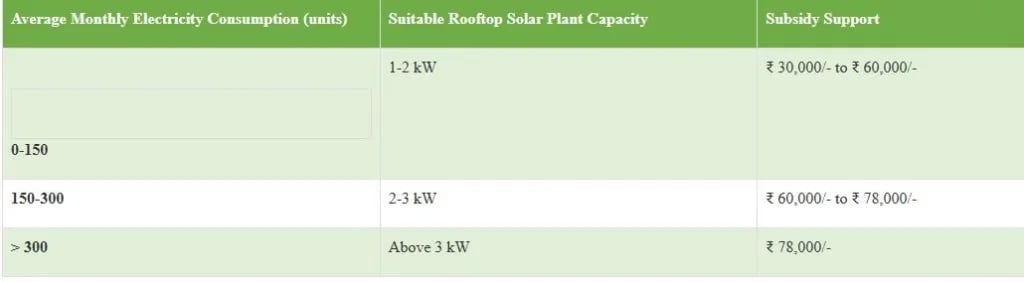
- The scheme offers a subsidy of up to 40% to households, making renewable energy more affordable and accessible.
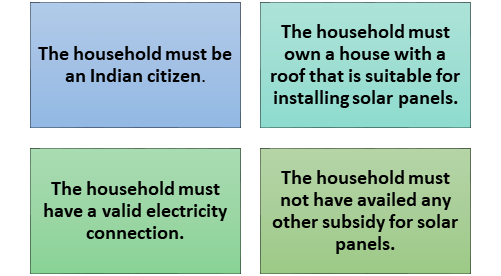
- Eligibility:
- Model Solar Village:
- An allocation of ₹800 crore has been designated for this component, with ₹1 crore provided to each selected Model Solar Village.
- To qualify as a candidate village, it must be a revenue village with a population of over 5,000 (or 2,000 in special category states).
- This initiative aims to promote solar energy adoption and empower village communities to achieve energy self-reliance.
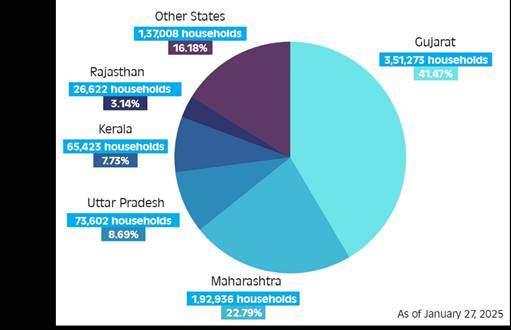
Top 5 states with the highest number of households benefiting under the PM Surya Ghar: Muft Bijli Yojana
Key Benefits of Scheme
- Provides free electricity to households through subsidized rooftop solar panel installations, significantly reducing energy costs.
- Expected to save the government around ₹75,000 crore annually in electricity expenses.
- Contributes to increasing renewable energy use and reducing carbon emissions by about 720 million tonnes.
- Adds 30 GW solar capacity via rooftop installations in the residential sector.
- Enables households to earn income by selling surplus generated power to DISCOMs.
- Creates an estimated 17 lakh direct jobs in various sectors.
Way Forward
- The PM Surya Ghar: Muft Bijli Yojana is well on track to achieve its ambitious goal of 1 crore solar-powered homes.
- Beyond reducing electricity costs, the scheme is fostering energy self-reliance, environmental sustainability, and economic growth, making it a key pillar in India’s clean energy transition.
Source: TH
Next article
News In Short 09-04-2026
